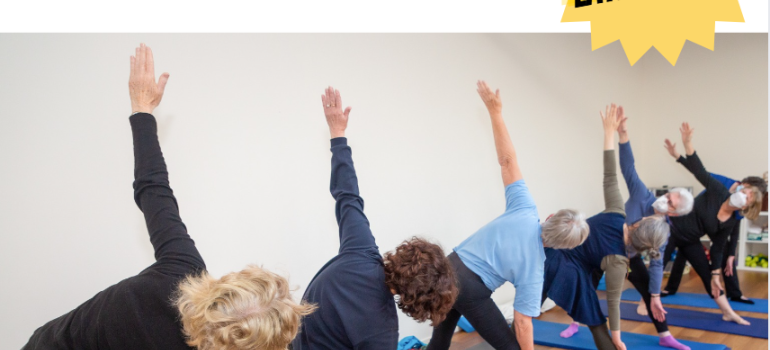
We spoke to three Tasmanian yoga teachers who either share, or have shared, yoga with people living with and/or recovering from cancer. We learned of their journey to specialising in this area, the many benefits they’ve witnessed and their students reported.
Yoga is much more than a physical exercise. It’s an ancient practice involving postures (asana), breath techniques (pranayama), relaxation and meditation; a science and philosophy dealing with body, breath, mind and - for those interested - the soul and ultimately, the universe itself.
Practitioners have long known its benefits, medical professionals now recommend it and research proves yoga can be healing.
Yoga can increase strength, flexibility and balance; assist maintenance of a healthy body weight and enhanced immune system; and improve quality of life by reducing stress and fatigue.
A cancer diagnosis doesn’t only impact your physical health. It can affect your mental health, relationships, study, career and financial security.
The Australian Institute of Health and Welfare estimates 165,000 Australians received cancer diagnoses in 2023, or 452 per day.[1] Cancer Australia research shows 2 in 5 people (43%) will be diagnosed with cancer by age 85.[2]
The good news is a survival rate around 70%, five years after diagnosis - up from just 51% in the late 1980s. It's predicted the numbers living with or beyond cancer will continue to increase.[3]
While treatment advancements have increased survival length and recovery, people living with cancer - and survivors - continue to face physical and mental health challenges, some lasting decades after initial treatment.
Survivors are more likely than people without a cancer history to experience disabilities, poor health from increased susceptibility to other illness, to report increased anxiety and experience disruptions to daily functioning and family life.[4]
A story about yoga and secondary lymphoedema from breast cancer
Yoga Therapist, Annette Loudon, had increasing numbers of women in her regular yoga classes who’d undergone, or were having, treatment for breast cancer - including women living with secondary lymphoedema resulting from their cancer treatment. To support these women, Annette researched the condition and trained as a specialist lymphoedema masseur.
While writing a book on the topic, Annette found little research on the effects of yoga in reducing secondary lymphoedema. While while studying for a Masters of Medical Sciences she conducted the first randomised control trial on the effects of yoga on women with secondary arm lymphoedema from breast cancer. The study’s southern Tasmanian yoga classes were conducted at Women’s Health Tasmania. This trial led to six ground-breaking peer-reviewed publications, and showed trends to improved lymphoedema status[5] and enhanced strength and mobility for participants.
The sessions, based on Satyananda Yoga, included postures, meditation, relaxation practices and specific breathing techniques, such as deep diaphragmatic breathing. The physical postures were performed slowly, with modifications promoting lymphatic drainage, following principles of best current care for those with breast cancer-related lymphoedema, and considered individual needs.
It’s important to note secondary lymphoedema isn’t only associated with breast cancer but can occur after treatment or surgery for many forms of cancer, including melanoma.
Stories about yoga and the mental health impacts of a cancer diagnosis
People experiencing, or who have experienced, cancer can feel overwhelmed and anxious. Studies suggest mental health disorders affect 30 – 35% of cancer patients during all phases of the illness, often differing in nature according to stage and type of cancer.[6]
Having experienced her own cancer journey, Melissa Howden now shares the benefits of yoga, mindfulness and meditation practices with others living with, or recovering from, cancer.
Melissa says a yoga session allows participants to let go of everything else for an hour, to simply be present with the body and breath. A regular yoga and mindfulness practice trains the mind to be more present throughout the day; to notice birds singing, feel the sun’s warmth and find more enjoyment in life.
Melissa also says the practice encourages awareness of other body parts, not just the part affected by cancer, inviting whole-body awareness. Along with gentle movements, the invitation and permission to rest the body encourages letting go of holding patterns in the body – releasing physical tension and assisting pain management. Deep relaxation, through Yoga Nidra, can often alleviate poor sleep and fatigue.
Oncology yoga teacher Jane Crosswell emphasises the importance of a safe space in which students can be nurtured, the practice modified for their individual needs, which might vary from day to day. If someone attends class and all they can manage is lying on the mat and breathing, then that’s OK.
Give yoga classes a try?
Small group classes, specifically for people impacted by cancer, enable people to find support, share experiences and feel safe. Not everyone wants to be social, but camaraderie can exist for those sharing similar trauma. Despite the reason for the group, lots of joy and laughter can be found in the company of others who understand the journey.
Facing mortality, we often re-examine our lives. It's a chance to reset. Yoga can help us sink deeper into our true nature and to reconnect with meaning and purpose.
[1] https://www.aihw.gov.au/reports/cancer/cancer-in-australia-2021/data
[2] https://www.canceraustralia.gov.au/impacted-cancer/what-cancer/cancer-australia-statistics
[3] https://www.cancer.org.au/assets/pdf/australians-living-with-and-beyond-cancer-in-2040
[4] Institute of Medicine. National Research Council. In: Hewitt M, Greenfield S, Stovall E, editors. (2006). From Cancer Patient to Cancer Survivor: Lost in Transition. Washington, DC: National Academies Press.
[5] https://www.researchgate.net/publication/321041452_Guidelines_for_teach…
[6] https://www.ncbi.nlm.nih.gov/pmc/articles/PMC7214708/